

.svg)
.svg)




Tất tần tật về FCL (Full Container Load) trong Logistics Everything you need to know about FCL (Full Container Load) in Logistics
 Expeditors Global
 16 April, 2026
 12 phút đọc
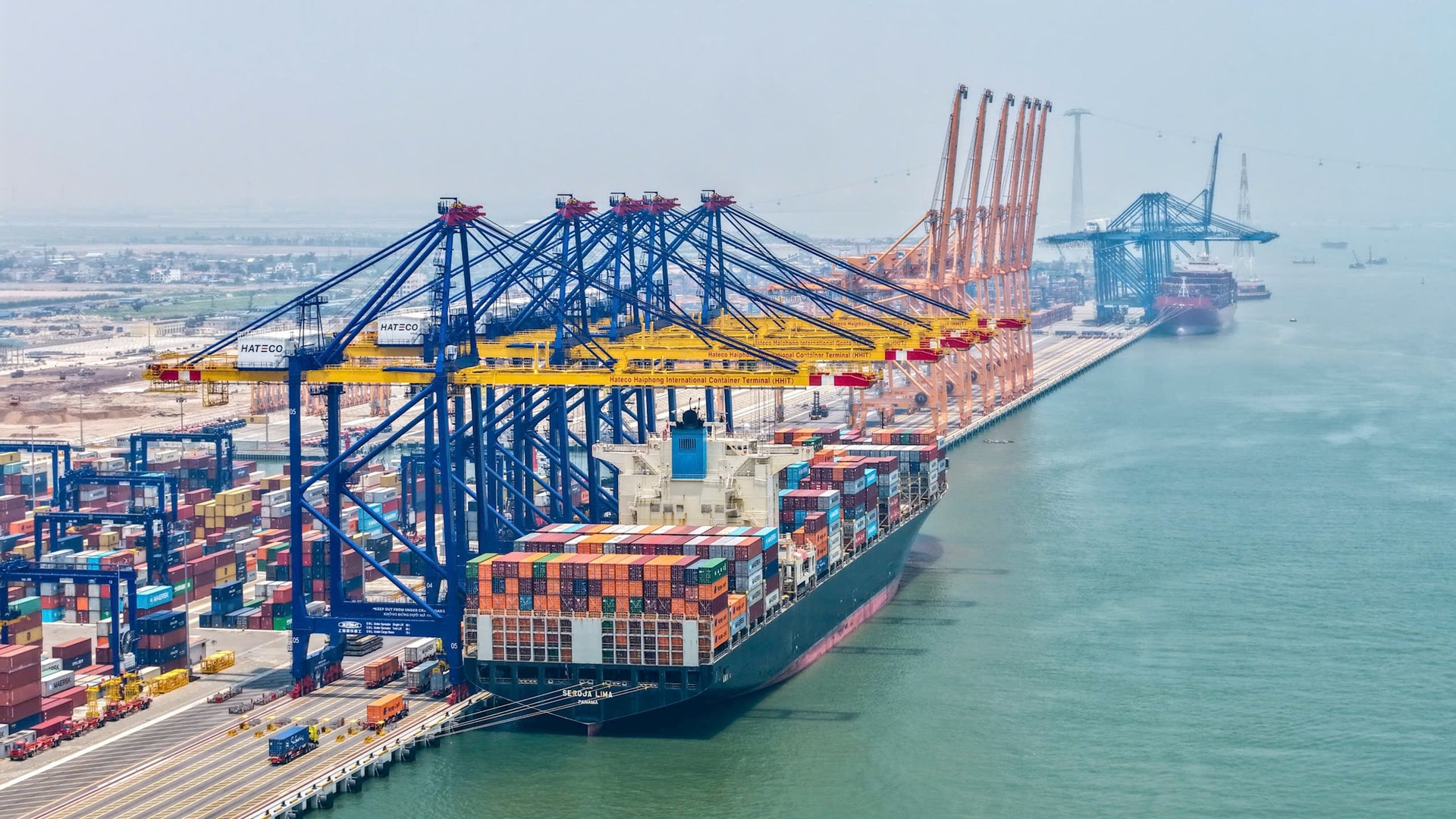
Trong bối cảnh hoạt động xuất nhập khẩu của Việt Nam đang phục hồi mạnh mẽ, nhu cầu vận chuyển hàng hóa quốc tế ngày càng tăng cao, đặc biệt với các thị trường trọng điểm như Mỹ, EU và Trung Quốc. Điều này đòi hỏi doanh nghiệp phải lựa chọn phương thức vận chuyển tối ưu về chi phí, thời gian và độ an toàn. Trong số đó, FCL (Full Container Load) đang trở thành lựa chọn hàng đầu cho các lô hàng lớn nhờ sự chủ động, nhanh chóng và bảo mật cao.
Vậy FCL là gì, khi nào nên sử dụng và có những lưu ý gì? Expeditors Global sẽ giúp bạn giải đáp chi tiết trong bài viết dưới đây.
FCL (Full Container Load) là gì?
FCL (viết tắt của Full Container Load) là một phương thức vận chuyển hàng hóa quốc tế thường dùng trong xuất nhập khẩu, trong đó một container tiêu chuẩn (20ft, 40ft hoặc 40ft HC) được sử dụng riêng biệt để chở hàng hóa cho một chủ hàng duy nhất. Không có hàng hóa của các chủ hàng khác được gom vào container này, giúp đảm bảo tính riêng tư, an toàn, và dễ kiểm soát.
FCL đặc biệt phù hợp với các doanh nghiệp xuất nhập khẩu có:
Số lượng hàng hóa lớn
Yêu cầu nghiêm ngặt về đóng gói, lưu kho và vận chuyển
Mong muốn tối ưu thời gian giao hàng và kiểm soát chi phí
Đặc điểm của hình thức Full container Load
Với hình thức FCL, các doanh nghiệp và công ty có thể sử dụng toàn bộ container để chứa hàng của mình mà không cần để chung với hàng hóa của các đơn vị khác như hình thức FCL.
Doanh nghiệp có thể hoàn toàn tự kiểm soát, kiểm tra được hàng hóa, đơn hàng của mình đi đến đâu, an toàn ra sao trong quá trình vận chuyển.
Vận chuyển theo hình thức FCL sẽ giúp doanh nghiệp tối ưu thời gian do không phải chờ đợi và ghép hàng với đơn vị khác.
Với phương thức này, hàng hóa của chủ doanh nghiệp cũng sẽ được bảo mật và an toàn hơn.
Cuối cùng với FCL, thủ tục hải quan và giấy tờ đơn giản hơn so với LCL
Ưu điểm
An toàn cho hàng hóa: Hàng hóa không bị trộn lẫn với của đơn vị khác, giúp tránh thất lạc, hư hỏng do va chạm hoặc lẫn lộn khi bốc xếp.
Hiệu quả chi phí với khối lượng lớn: Chi phí vận chuyển tính trên container, vì vậy với lô hàng lớn, giá mỗi đơn vị hàng hóa giảm rõ rệt so với vận chuyển LCL.
Thời gian vận chuyển nhanh hơn: Không cần thời gian gom hàng, chờ đủ tải hoặc phân chia, container FCL được chuyển thẳng từ nơi gửi đến điểm nhận.
Kiểm soát dễ dàng thủ tục & vận hành: Chỉ có một chủ hàng, bạn sẽ dễ theo dõi lộ trình, làm thủ tục hải quan nhanh gọn, và chủ động hơn trong việc xử lý phát sinh.
Nhược điểm
Không tối ưu cho các lô hàng nhỏ lẻ: Khác với LCL, khi sử dụng hình thức FCL, nếu bạn không sử dụng hết dung tích container, phần không gian dư thừa vẫn bị tính phí.
Yêu cầu kho bãi & quy trình đóng hàng kỹ lưỡng: Phải có nơi đóng hàng đủ điều kiện kỹ thuật để niêm phong container đúng chuẩn.
Chi phí đầu tư ban đầu cao hơn LCL: Nhưng sẽ tiết kiệm về lâu dài nếu hàng hóa lớn.
Quy trình vận chuyển Full Container Load tiêu chuẩn
Để đảm bảo hàng hóa được vận chuyển hiệu quả, an toàn và đúng tiến độ, quy trình vận chuyển FCL cần tuân thủ đầy đủ các bước từ khâu chuẩn bị, đóng gói đến giao hàng cuối cùng. Việc hiểu rõ quy trình này không chỉ giúp doanh nghiệp chủ động trong kế hoạch logistics mà còn góp phần tối ưu chi phí và hạn chế rủi ro phát sinh trong quá trình xuất nhập khẩu.
Bước 1: Chuẩn bị hàng hóa và lựa chọn container
Quá trình vận chuyển FCL bắt đầu bằng việc xác định loại hàng hóa, thể tích (CBM), trọng lượng và các yêu cầu đặc biệt (nếu có: dễ vỡ, nguy hiểm, cần giữ nhiệt…). Từ đó, lựa chọn loại container phù hợp như:
Container 20 feet (20’ DC) cho hàng nặng, thể tích nhỏ
Container 40 feet (40’ DC) hoặc 40 feet cao (40’ HC) cho hàng nhẹ, thể tích lớn
Việc lựa chọn đúng loại container giúp tiết kiệm chi phí và đảm bảo an toàn cho hàng hóa.
Bước 2: Đóng hàng (Stuffing)
Đóng hàng là bước then chốt trong quy trình vận chuyển FCL. Hàng hóa được đưa vào container tại kho của chủ hàng hoặc kho thuê ngoài (có thể sử dụng dịch vụ của Expeditors Global):
Kiểm tra container rỗng: đảm
bảo không có mùi, không bị thủng, ẩm mốc, rỉ sét, hư hỏng.
Xếp hàng đúng sơ đồ: phân bổ trọng lượng hợp lý để tránh lệch tải trong quá trình di chuyển.
Gia cố hàng hóa: dùng dây chằng, pallet, đệm sốc hoặc túi khí để tránh va đập.
Niêm phong (seal): Sau khi đóng hàng, container được gắn seal số niêm phong duy nhất để bảo đảm an toàn và phục vụ cho quá trình làm thủ tục hải quan.
Lưu ý: Seal niêm phong rất quan trọng, nếu seal hỏng, sai số sẽ bị nghi ngờ là có gian lận hoặc rủi ro trong quá trình vận chuyển.
Bước 3: Vận chuyển nội địa từ kho đến cảng
Container sau khi được đóng và niêm phong sẽ được vận chuyển bằng xe đầu kéo đến cảng xuất khẩu:
Expeditors Global hỗ trợ dịch vụ vận chuyển nội địa nhanh chóng và đúng hẹn.
Lộ trình có thể được theo dõi thông qua hệ thống tracking container điện tử.
Bước 4: Làm thủ tục hải quan xuất khẩu
Tại cảng, doanh nghiệp hoặc đơn vị logistics sẽ tiến hành khai báo hải quan:
Chuẩn bị các chứng từ cần thiết: hóa đơn thương mại (Invoice), phiếu đóng gói (Packing list), hợp đồng, C/O (nếu có), vận đơn (Bill of Lading) …
Khai báo hải quan điện tử trên hệ thống VNACCS/VCIS
Có thể kiểm tra thực tế (kiểm hóa) nếu hải quan yêu cầu
Expeditors Global cung cấp dịch vụ khai báo hải quan trọn gói, hỗ trợ xử lý nhanh chóng và chính xác hồ sơ, giúp tiết kiệm thời gian cho doanh nghiệp.
Bước 5: Vận chuyển quốc tế bằng đường biển
Sau khi thông quan, container sẽ được xếp lên tàu theo lịch trình đã đặt với hãng tàu. Thời gian vận chuyển phụ thuộc vào:
Tuyến đường (châu Á, châu Âu, Mỹ…)
Hãng tàu
Điều kiện thời tiết, mùa cao điểm (peak season)
Thông thường, thời gian vận chuyển có thể từ 3–30 ngày tùy theo điểm đến.
Bước 6: Làm thủ tục nhập khẩu tại cảng đích
Khi container đến cảng nhập khẩu, đại lý giao nhận hoặc người nhận hàng sẽ:
Khai báo hải quan nhập khẩu
Nộp thuế nhập khẩu (nếu có)
Lấy container ra khỏi cảng (nếu là điều kiện CIF hoặc tương đương)
Bước 7: Giao hàng đến nơi nhận (Delivery)
Tùy theo yêu cầu của khách hàng, container sẽ được:
Giao nguyên container về địa điểm chỉ định
Dỡ hàng tại kho trung chuyển, sau đó giao lẻ
Giao đến tận tay người nhận, bao gồm cả dịch vụ nâng hạ, dỡ hàng (nếu cần)
Khi nào nên chọn hình thức FCL?
FCL là giải pháp lý tưởng trong các trường hợp:
Hàng hóa lớn hơn 15–20 CBM (tương đương 8–10 pallet hoặc hơn 10 tấn)
Cần giữ nguyên kiện, nguyên lô, bảo mật tuyệt đối
Thời gian là yếu tố quan trọng (muốn tránh trễ hàng do gom LCL)
Hàng dễ hư hỏng hoặc cần điều kiện vận chuyển đặc biệt (đóng pallet, chống sốc, hút ẩm…)
Các loại container thường dùng trong FCL
Loại Container | Kích thước (D x R x C) | Dung tích | Trọng tải tối đa |
20′ DC | 6.06 x 2.44 x 2.59 m | ~33 CBM | ~28 tấn |
40′ DC | 12.19 x 2.44 x 2.59 m | ~67 CBM | ~30 tấn |
40′ HC | 12.19 x 2.44 x 2.89 m | ~76 CBM | ~30 tấn |
Lưu ý: Với hàng hóa nhẹ, nên ưu tiên container 40’ để tiết kiệm cước trên đơn vị CBM. Với hàng nặng, nên chọn 20’.
Trong bối cảnh kim ngạch xuất nhập khẩu của Việt Nam ngày càng tăng, FCL (Full Container Load) là giải pháp tối ưu để các doanh nghiệp kiểm soát lô hàng lớn với chi phí tính trên container, thời gian thông quan nhanh và mức độ an toàn vượt trội. Khi quy trình FCL được thực hiện đúng chuẩn – từ khâu chọn container, đóng hàng, khai báo hải quan đến giao hàng cuối cùng – doanh nghiệp không chỉ giảm rủi ro mà còn gia tăng lợi thế cạnh tranh trên thị trường quốc tế.
Amidst Vietnam's strong recovery in import and export activities, the demand for international freight transportation is increasing, especially with key markets such as the US, EU, and China. This requires businesses to choose the most cost-effective, time-efficient, and secure transportation method. Among these, FCL (Full Container Load) is becoming the top choice for large shipments due to its proactive, fast, and highly secure operation.
So, what is FCL, when should you use it, and what are some things to keep in mind? Expeditors Global will provide you with detailed answers in the article below.
What is FCL (Full Container Load)?
FCL (short for Full Container Load) is a commonly used international freight method in import and export, where a single standard container (20ft, 40ft, or 40ft HC) is used exclusively to transport goods for a single shipper. No goods from other shippers are consolidated into this container, ensuring privacy, security, and easy control.
FCL is particularly suitable for import and export businesses that have:
Large quantity of goods
Strict requirements for packaging, storage, and transportation.
The goal is to optimize delivery times and control costs.
Characteristics of Full Container Load
With the FCL (Full Container Load) method, businesses and companies can use an entire container to store their goods without having to mix them with goods from other entities, unlike the traditional FCL method.
Businesses can completely control and monitor the status of their goods and orders, ensuring their safety during transportation.
Full container load (FCL) shipping helps businesses optimize time by eliminating the need to wait for or consolidate shipments with other carriers.
With this method, the business owner's goods will also be more secure and safe.
Finally, with FCL, customs procedures and paperwork are simpler compared to LCL.
Advantage
Goods safety: Goods are not mixed with those of other units, helping to avoid loss, damage due to collisions, or mixing up during loading and unloading.
Cost-effective for large volumes: Shipping costs are calculated per container, so for large shipments, the price per unit of goods is significantly lower compared to LCL (Less than Container Load) shipping.
Faster shipping times: No need for consolidation, waiting for full load, or sorting; FCL containers are shipped directly from the point of origin to the point of destination.
Easier control of procedures and operations: With only one shipper, you can easily track the shipment, expedite customs procedures, and be more proactive in handling unforeseen issues.
Disadvantages
Not ideal for small shipments: Unlike LCL (Less than Container Load), with FCL (Full Container Load), if you don't use the entire container capacity, any excess space will still be charged.
Requires meticulous warehousing and packing procedures: There must be a packing facility that meets the technical requirements for properly sealing containers.
The initial investment cost is higher than LCL (Less Than Container Load), but it will save money in the long run if the goods are large.
Standard Full Container Load shipping procedure
To ensure efficient, safe, and timely delivery of goods, the FCL (Full Container Load) shipping process must fully comply with all steps from preparation and packaging to final delivery. Understanding this process not only helps businesses proactively plan their logistics but also contributes to optimizing costs and minimizing risks during import and export.
Step 1: Prepare the goods and choose a container.
The FCL shipping process begins with identifying the type of cargo, volume (CBM), weight, and any special requirements (if any: fragile, hazardous, requiring temperature control, etc.). From there, the appropriate container type is selected, such as:
20-foot (20' DC) container for heavy, small-volume goods.
40-foot (40' DC) or 40-foot high (40' HC) containers are suitable for light, high-volume goods.
Choosing the right type of container helps save costs and ensures the safety of goods.
Step 2: Packing (Stuffing)
Loading is a crucial step in the FCL shipping process. Goods are loaded into containers at the shipper's warehouse or a leased warehouse (Expeditors Global services may be used):
Check empty containers: ensure
Guaranteed to be odorless, free from holes, mold, rust, and damage.
Properly align the cargo according to the plan: distribute the weight appropriately to avoid load imbalance during transit.
Secure your cargo: use straps, pallets, shock absorbers, or airbags to prevent damage from impacts.
Sealing: After loading, the container is sealed with a unique serial number to ensure security and facilitate customs procedures.
Note: The seal is very important; if the seal is broken or inaccurate, it will raise suspicion of fraud or risk during transportation.
Step 3: Domestic transportation from warehouse to port
After being loaded and sealed, the containers will be transported by tractor-trailer to the export port.
Expeditors Global provides fast and on-time domestic shipping services.
The route can be tracked through an electronic container tracking system.
Step 4: Complete export customs procedures.
At the port, the business or logistics unit will carry out customs declaration:
Prepare the necessary documents: commercial invoice, packing list, contract, Certificate of Origin (if any), bill of lading, etc.
Electronic customs declaration on the VNACCS/VCIS system
A physical inspection (customs check) may be conducted if requested by customs.
Expeditors Global provides comprehensive customs clearance services, supporting the quick and accurate processing of documents, saving businesses time.
Step 5: International shipping by sea
After customs clearance, the containers will be loaded onto the ship according to the schedule arranged with the shipping company. Shipping time depends on:
Route (Asia, Europe, America…)
Shipping company
Weather conditions, peak season
Typically, shipping time can range from 3 to 30 days depending on the destination.
Step 6: Complete import procedures at the destination port.
When the container arrives at the import port, the freight forwarder or consignee will:
Import customs declaration
Pay import tax (if applicable).
Remove the container from the port (if CIF or equivalent terms apply).
Step 7: Delivery to the recipient's location
Depending on customer requirements, the container will be:
Deliver the entire container to the designated location.
Unload goods at the transit warehouse, then deliver to smaller quantities.
Delivery to the recipient's door, including loading and unloading services (if needed).
When should you choose FCL (Full Container Load) shipping?
FCL is the ideal solution in the following cases:
Goods larger than 15–20 CBM (equivalent to 8–10 pallets or more than 10 tons)
The package must be kept intact, the entire lot must be preserved, and absolute confidentiality must be maintained.
Time is a crucial factor (to avoid delays due to LCL consolidation).
Perishable goods or goods requiring special shipping conditions (palletizing, shock protection, dehumidification, etc.)
Types of containers commonly used in FCL (Full Container Load)
Container type | Dimensions (L x W x H) | Capacity | Maximum payload |
20′ DC | 6.06 x 2.44 x 2.59 m | ~33 CBM | ~28 tons |
40′ DC | 12.19 x 2.44 x 2.59 m | ~67 CBM | ~30 tons |
40′ HC | 12.19 x 2.44 x 2.89 m | ~76 CBM | ~30 tons |
Note: For light goods, 40' containers are preferred to save on freight costs per CBM. For heavy goods, 20' containers are recommended.
In the context of Vietnam's increasing import and export turnover, FCL (Full Container Load) is the optimal solution for businesses to manage large shipments with cost-effectiveness per container, fast customs clearance times, and superior security. When the FCL process is carried out correctly – from container selection, loading, customs declaration to final delivery – businesses not only reduce risks but also increase their competitive advantage in the international market.